Removing duplicates, and ordering results

Question
How can you produce an ordered list of the first 10 surnames in the members table? The list must not contain duplicates.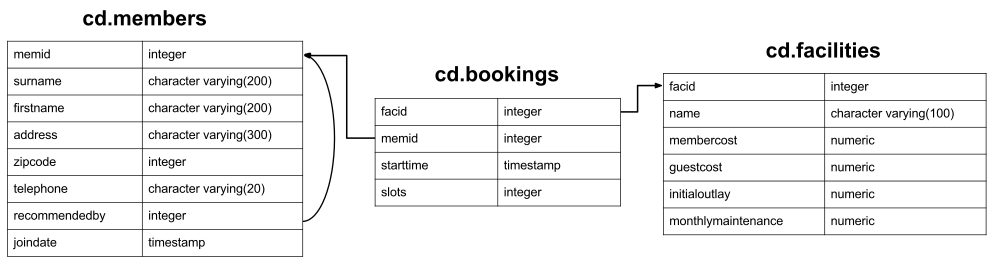
Expected Results
| surname |
|---|
| Bader |
| Baker |
| Boothe |
| Butters |
| Coplin |
| Crumpet |
| Dare |
| Farrell |
| GUEST |
| Genting |
Your Answer
Your Results
Loading database...
Answers and Discussion
select distinct surname
	from cd.members
order by surname
limit 10;
There's three new concepts here, but they're all pretty simple.
- Specifying
DISTINCTafterSELECTremoves duplicate rows from the result set. Note that this applies to rows: if row A has multiple columns, row B is only equal to it if the values in all columns are the same. As a general rule, don't useDISTINCTin a willy-nilly fashion - it's not free to remove duplicates from large query result sets, so do it as-needed. - Specifying
ORDER BY(after theFROMandWHEREclauses, near the end of the query) allows results to be ordered by a column or set of columns (comma separated). - The
LIMITkeyword allows you to limit the number of results retrieved. This is useful for getting results a page at a time, and can be combined with theOFFSETkeyword to get following pages. This is the same approach used by MySQL and is very convenient - you may, unfortunately, find that this process is a little more complicated in other DBs.